
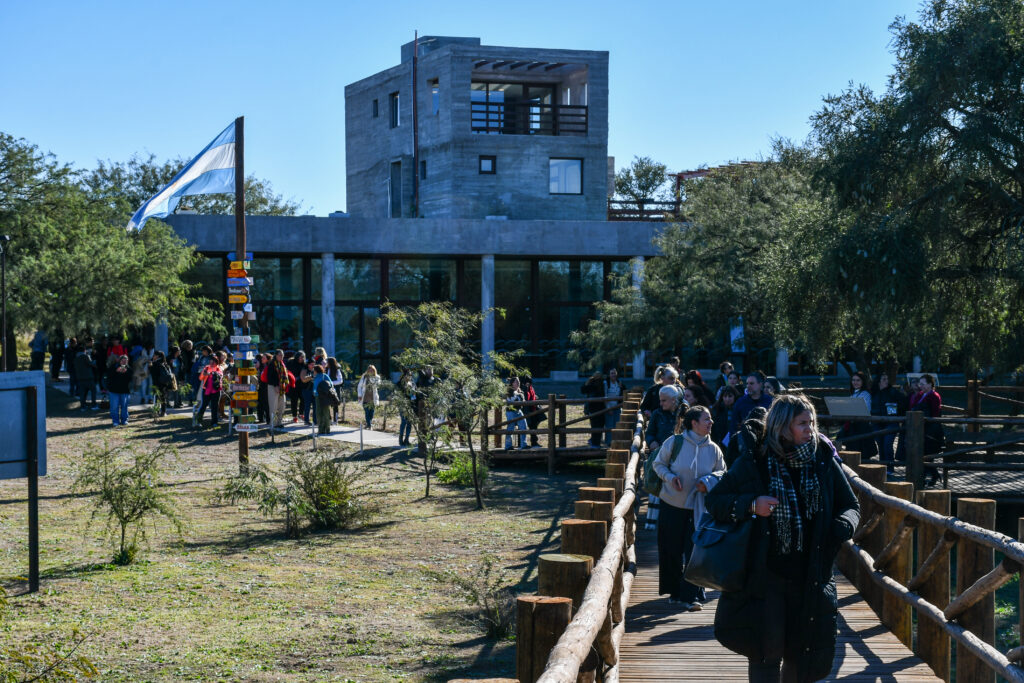
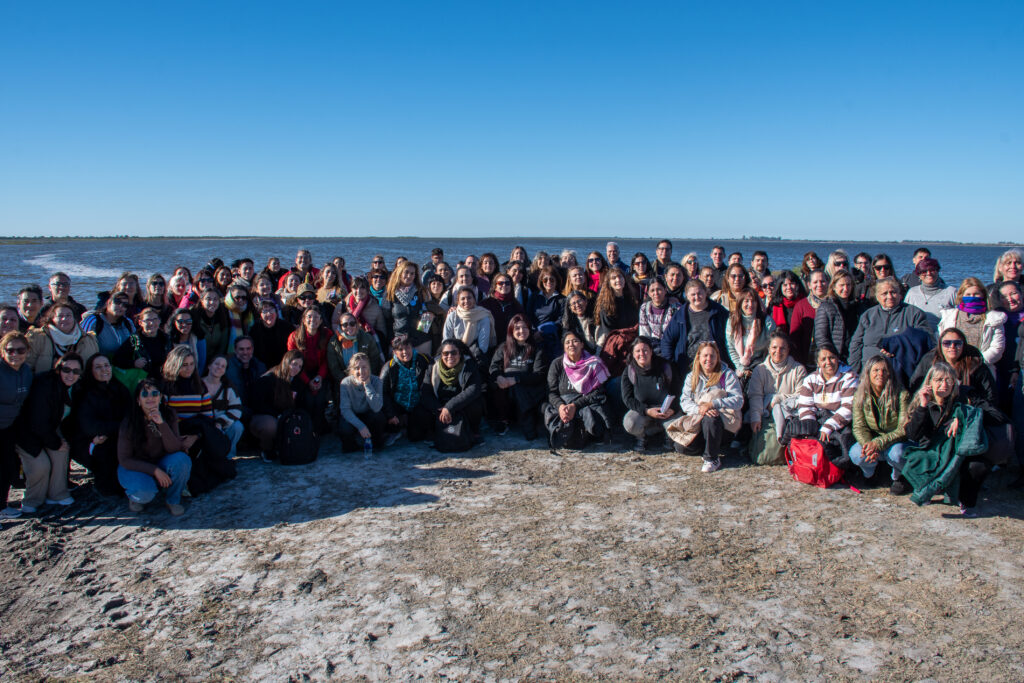
The La Para Interpretation Center hosted a five-day training program that brought together more than 500 teachers from various parts of the province of Córdoba.
On the endless plains of Ansenuza, beneath a sky filled with breathtaking sunrises and sunsets, we gathered for a variety of training activities consisting of two components: a theoretical component and a practical component. Under the title “Environment, Sustainability, Circular Economy, and Territory,” five teacher training sessions were held between April and August 2026.
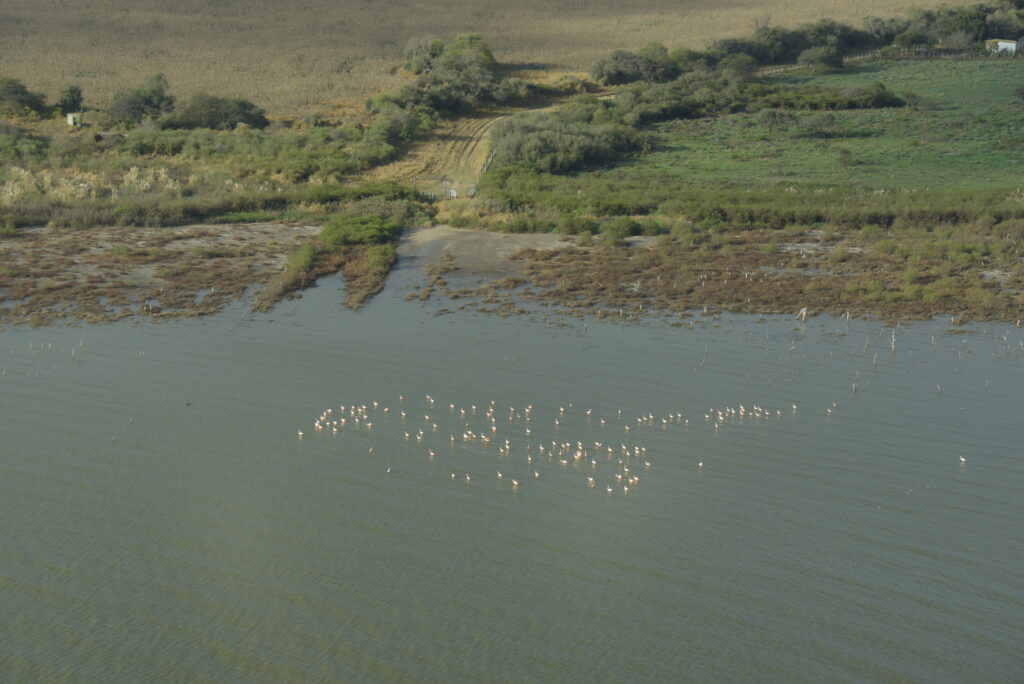
This territory comprises a mosaic of habitats that includes a unique ecosystem spanning more than one million hectares, forming one of the largest wetlands in South America. Designated a Ramsar Site in 2002 and a National Park in 2022—a key milestone in which Fundación Naturaleza Argentina played a role—it is home to more than 60% of Argentina’s migratory birds, as well as other iconic species such as the rhea and the aguará guazú (maned wolf).
A protected area is much more than a conservation space: it is a living territory where biodiversity and the ways of life of the communities that inhabit it are intertwined. Our approach holds that working in and for protected areas involves not only conserving nature, but also strengthening the bonds between people and their environment—by promoting the responsible use of the land and supporting collective efforts to defend the common good.
That is why, through the design and consolidation of conversation networks, we promote protected areas as strategic spaces that integrate diverse uses and knowledge around a shared vision. We lead and support participatory processes alongside communities, governments, and other key stakeholders to foster institutional partnerships that strengthen local capacities and management capabilities in coordination with public policies.
On this occasion, we had the opportunity to participate in the opening of the teachers’ conference and share the knowledge that our professionals, together with the communities, have built up over the years regarding biodiversity and its invaluable contribution to these regions. We set out with a clear goal: to expand initiatives that inspire future generations to get involved in caring for the environment.
We discussed the main threats it faces, and then delved deeper into the role of protected areas and the civic engagement needed to conserve them. This session provided a space for discussion and group reflection, enriched by a diversity of knowledge and perspectives.
Environmental education goes beyond the classroom
The participants’ response was extremely enriching, as we met teachers who expressed a keen interest in the topic and who were convinced that environmental education extends beyond the classroom. Many of them shared experiences and projects they are already carrying out in schools that extend into the neighborhoods, even involving families, and that strengthen the commitment of the entire community.
During the practical component, on the other hand, we collaborated with the teachers, who helped design educational proposals with teaching materials for use in schools, adapting them to the specific circumstances of each community.
Y si bien fueron reuniones de formación, la invitación también implicaba vivenciar el territorio de un modo diferente y transmitir nuevas formas de cuidar la casa común. Por lo que, como cierre de cada jornada, recorrimos las pasarelas de la futura Reserva Municipal “Bahía de Ansenuza”.
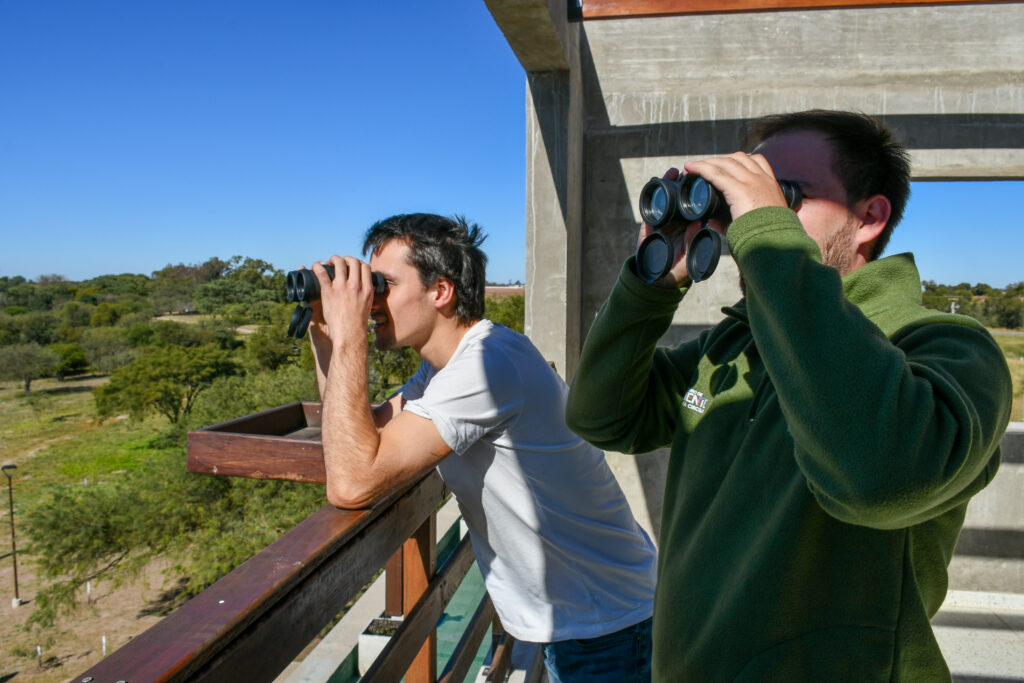
Yes, learning moved beyond the classroom to become a hands-on experience: the discovery of one of the province’s most wonderful landscapes, composed of a mosaic of environments that includes rivers, lagoons, the Chaco forest, saltbushes, reed beds, and muddy beaches. We also went birdwatching for migratory and shorebirds; we took in the scents and observed the wide variety of vegetation in the area. This journey allowed us to marvel at the place’s immense natural and cultural richness; because we understand that enjoying and being moved by nature is part of conservation—since we only protect what we know and what touches us deeply.
An opportunity to listen to one another
For Fundación Naturaleza Argentina, these workshops provided an opportunity to learn about the daily challenges faced by educators and to collaboratively brainstorm possible strategies for continuing to strengthen networks for collective action, as we understand that major environmental challenges can only be addressed through collaborative efforts.
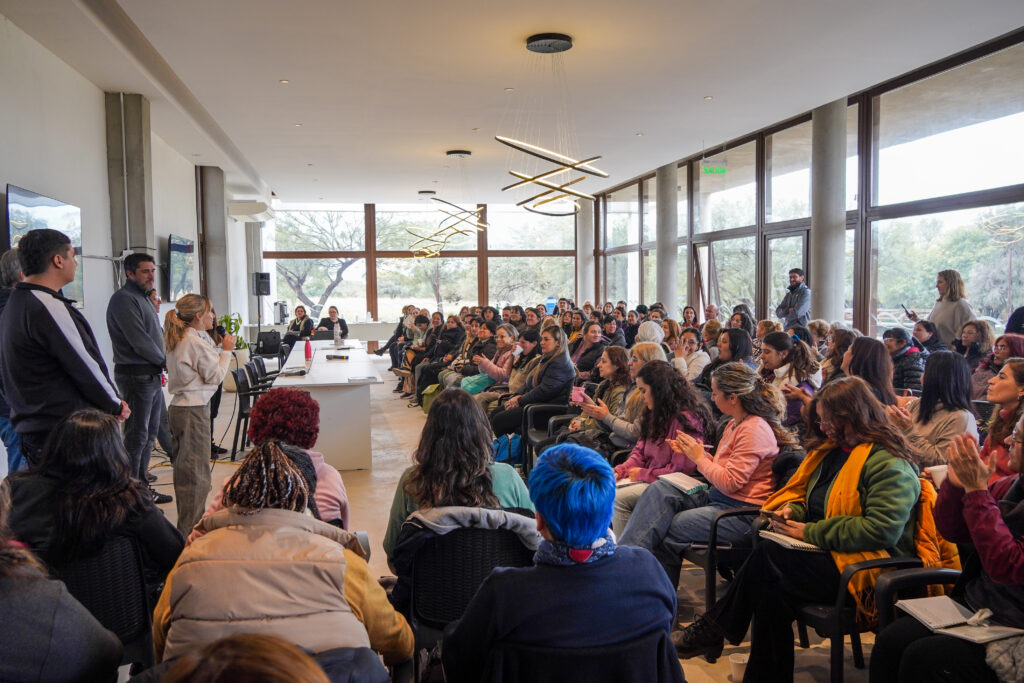
We also had the opportunity to share with the teachers the path we have been following alongside the community, other organizations, and various levels of government to conserve the Ansenuza region. And to demonstrate, through concrete examples, how collaboration among different stakeholders brings about real and sustainable change over time.
An experience that strengthened knowledge, connections, and commitments
We are convinced that this experience not only strengthened our knowledge but also forged meaningful bonds and reinforced our commitment and desire to continue working together for biodiversity conservation. We conclude this cycle with the certainty that every teacher who participated will serve as an advocate in their community and that, as diverse stakeholders, we can build a better future for future generations.