
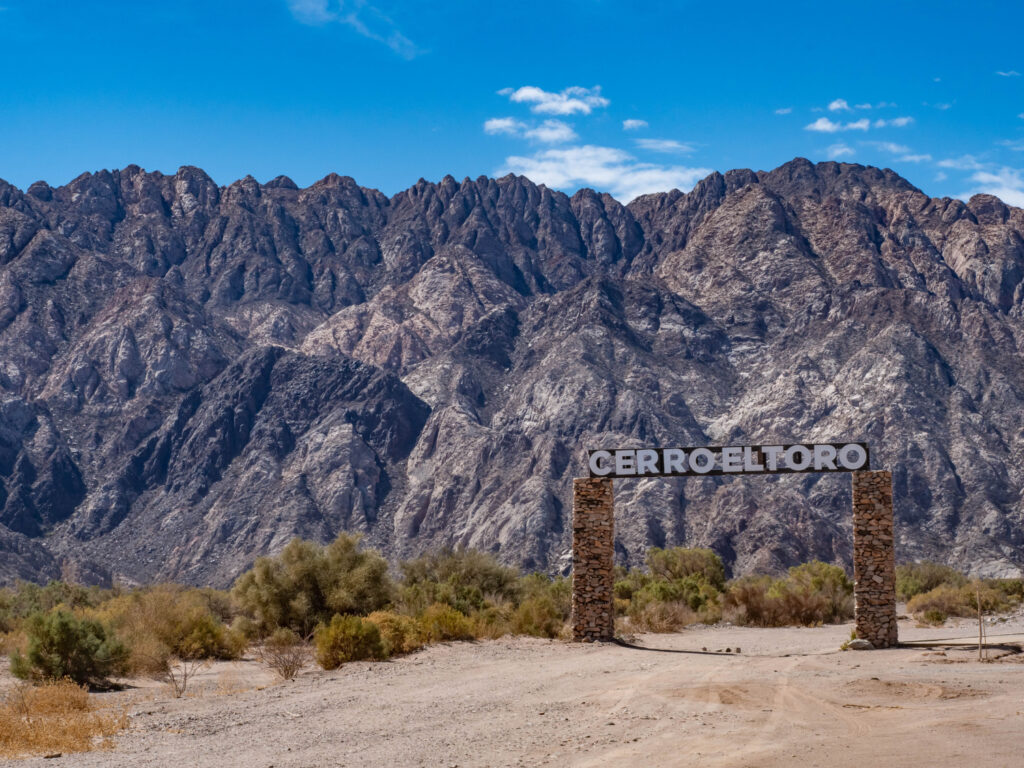
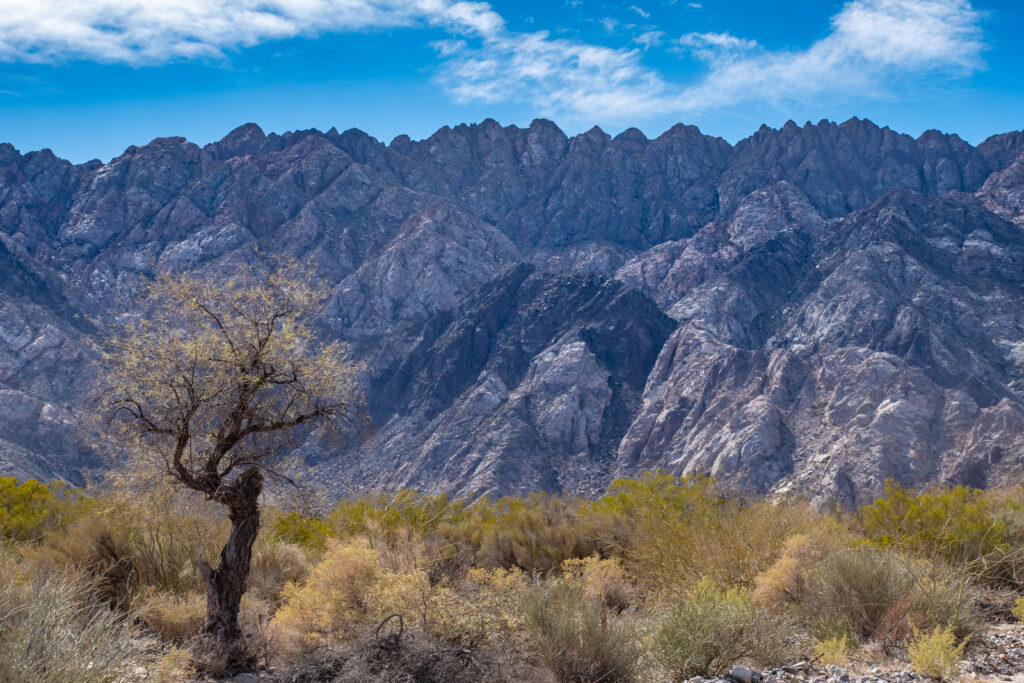
Nestled in the Sierras de Famatina mountain range in La Rioja province, Cerro El Toro rises, a mountain formation named for its profile, which resembles the silhouette of a bull in a charging stance.
Its dark purple color and imposing presence draw the attention of visitors to Villa Castelli, but what makes it unique goes far beyond its landscape: here, the vestiges of an ancient civilization coexist with the biodiversity of an exceptional natural environment, protected as the Cerro El Toro Natural and Cultural Reserve. conviven los vestigios de una civilización milenaria y la biodiversidad de un entorno natural excepcional, resguardados bajo la figura de Reserva Natural Cultural Cerro El Toro.
Hoy, gracias a un plan de readecuación y revalorización de senderos tradicionales Today, thanks to a plan to rehabilitate and enhance traditional trails, spearheaded by the Municipality of General Lamadrid, this site is reopening to the world with renewed vigor. The municipality made the decision and invested in the restoration, and subsequently, Natura Argentina and the Undersecretariat of Cultural Heritage and Museums of the Province of La Rioja joined forces to work on the trails' recovery. This collective initiative also involved the local community and specialists in archaeology and conservation. Natura Argentina y la Subsecretaría de Patrimonio Cultural y Museos de la Provincia de La Rioja se sumaron para trabajar en la recuperación de los senderos. Esta iniciativa colectiva también contó con la participación de la comunidad local y especialistas en arqueología y conservación.
.
.
Re-adapting to Preserve and Discover
The project began with a need: heavy rains were causing the soil to erode on every slope, jeopardizing access and the preservation of the site. The work was meticulous: stones were rearranged, edges were reinforced, and techniques were applied that respect the landscape as much as possible.
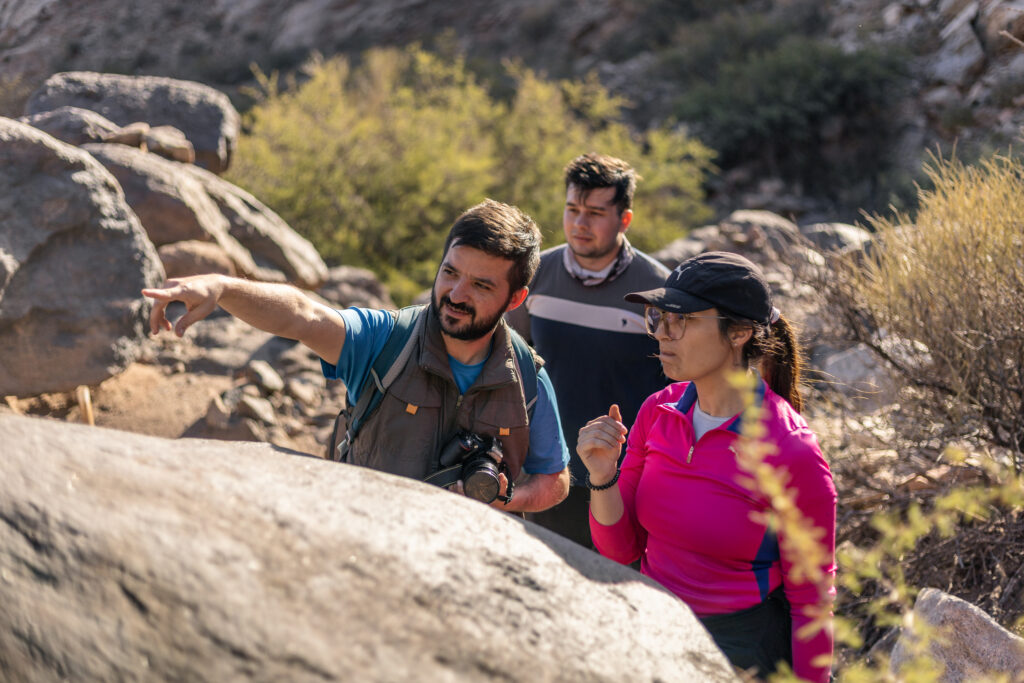
Andrés Baissero es técnico en Naturaleza Argentina Andrés Baissero, a technician at Natura Argentina, explains part of this process while pointing out elements of the landscape: time was dedicated to analyzing what had been done in this place, how the local people use it, and what could be improved from a sustainable tourism perspective. “Everything was done in multidisciplinary teams. Previous archaeological studies were respected, but a new and collaborative narrative was given a twist, which was developed together with Proyecto Ambiental, specialists in the field. All the local guides also participated,” he summarizes. Proyecto Ambiental, especialistas en el tema. También participaron todos los guías del lugar”, resume.
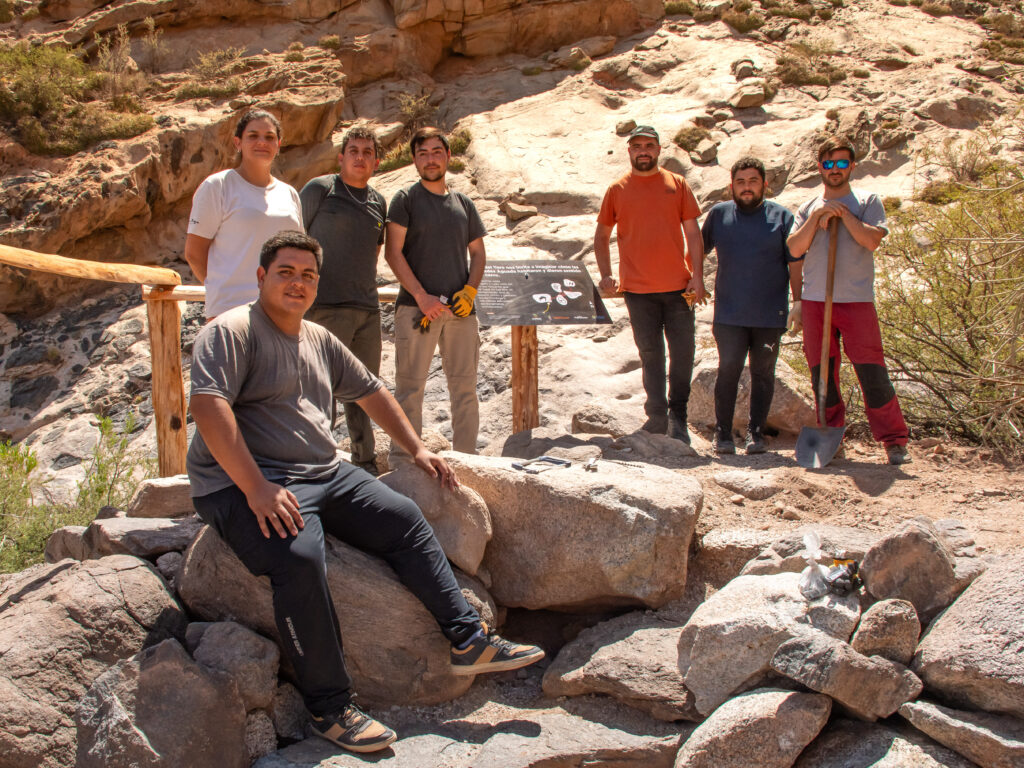
Rocío Cardona también es técnica en este proyecto de Naturaleza Argentina. El equipo técnico no solo aportó conocimientos, sino que además participó activamente en las jornadas de trabajoRocío Cardona is also a technician on this Natura Argentina project. The technical team not only contributed their expertise but also actively participated in the workdays, which were joined by municipal and provincial workers, as well as student volunteers. Enthusiastically, they tell us that they even worked in the rain and snow. The result is a network of low-impact trails that respect the original layout from an archaeological perspective, but with adjustments to prevent erosion from rain, among other details. senderos de bajo impacto, que respetan el trazado original desde una mirada arqueológica, pero con correcciones para evitar la erosión de las lluvias, entre otros detalles.
“Trasladamos material de otras zonas y luego armamos los senderos. Ahora “We moved materials from other areas and then built the trails. Now the intervention seems minimal, almost imperceptible,” explains Rocío, pointing to the path that climbs the mountain.”, explica Rocío señalando el caminito que sube la sierra.
The process was based on previous archaeological studies, which served as the foundation for defining each intervention. In addition, two interpretive circuits were designed, with scripts developed in collaboration with the Environmental School and local guides.
Eso no significa que los senderos no requieran mantenimiento, ni que dejen de implicar un despliegue de recursos locales That does not mean that the trails do not require maintenance, nor that they cease to involve a deployment of local resources to ensure an interesting experience for those who visit them. In fact, the process also included training technicians in trail restoration, building the community's capacity to sustain this work over time. Damián, our guide today, shows us the trail and concludes: “Working together here has been wonderful. This site is unique in the country and can be visited in our department.” The restoration not only improved accessibility but also restored the trail's ancestral character: a path that connects past and present. sostener este trabajo en el tiempo. Damián, el guía que nos acompaña hoy, muestra el recorrido y concluye: “Trabajar juntos en este lugar ha sido algo hermoso, este sitio es único en el país y se puede visitar en nuestro departamento”.
The restoration not only improved accessibility but also restored the trail's ancestral character: a path that connects past and present.
A landscape that holds culture and wildlife
Cerro El Toro is much more than a natural setting. Here, between 770 and 1400 AD, lived populations linked to the Argentino culture, identified with the "Aguada" ceramic style, who occupied various territories in Northwest Argentina. Their influence is still recognizable in the stone dwellings, the architecture camouflaged against the hillside, and the petroglyphs of jaguars and human figures.
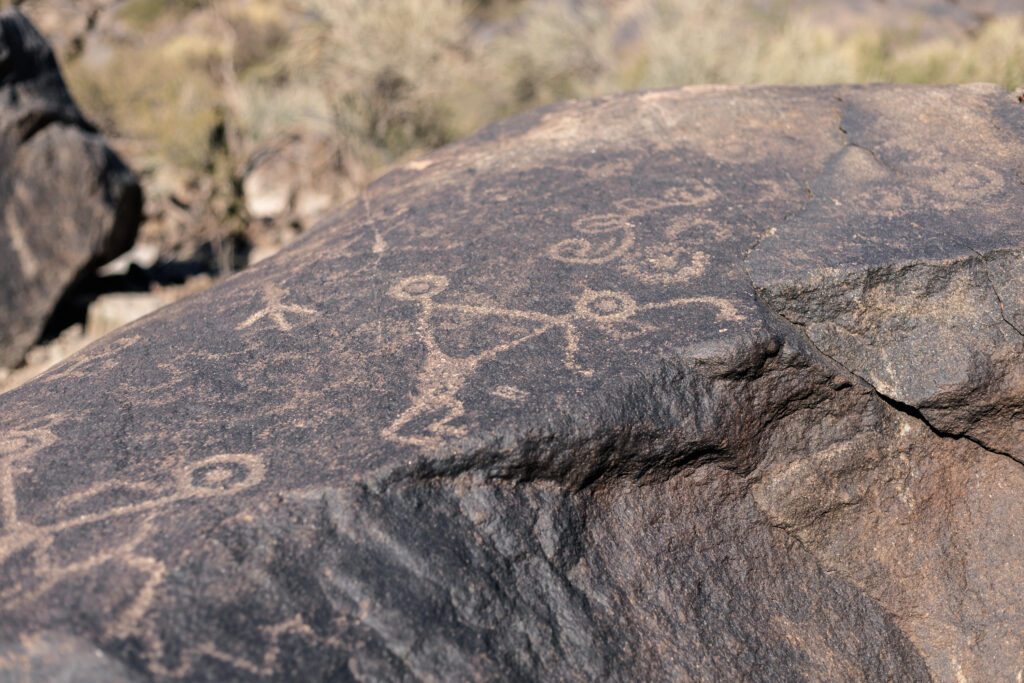
Aguada rock art consisted of figures and drawings carved in stone using the pecking and scraping technique. Among the petroglyphs with anthropomorphic motifs (human and animal representations), three figures can be seen wearing an unku (an Andean tunic made of fine fabric) with jaguar spots. These rock art manifestations were part of the system of rituals and religious beliefs of the groups or individuals who lived there, a system shared by many societies in the Valliserrana region. / Photo: Natura Argentina.
The Reserve also holds extraordinary natural wealth: from the Andean Condor to the Famatina Piche-tailed Lizard, a microendemic species exclusive to the region.
Caminar por estos senderos es sumergirse en la vida cotidiana de quienes habitaron estas montañasWalking along these trails is to immerse yourself in the daily life of those who inhabited these mountains: seeing the dwellings that sheltered families, discovering the ancestral engravings that were part of rituals, and appreciating the mountain range from a unique perspective. Damián left us for a moment up here, asked us to stop, and in that shared silence, we were able to understand the beauty of the place. You have to come here, give yourself a pause facing the mountain range, and experience it. ●
●
Visit Cerro El Toro
Cerro El Toro is a Provincial Historical and Natural Monument, and tours are conducted with a certified local guide. Guided tours can be requested at the General Lamadrid Municipality's tourism office.
Here, among hills that resemble mythological creatures, petroglyphs that tell stories, and landscapes that transform with every ray of sunlight, visitors discover that the true magic of this place lies not only in what they see, but also in what is preserved through collective effort.
This Natural and Cultural Reserve has a visitor center equipped with amenities such as accessible restrooms, internet access, hot water, tourist information, and a cultural market that currently showcases local crafts and offers a recreational space.
What can you do here?
- Trekking and hiking
- Archaeological site
- Flora observation
- Fauna observation
- Panoramic views
Open daily from 9:00 a.m. to 8:00 p.m. Fees: Entrance fees can be obtained by calling 3804 865393 / 3825 573602 / 3804 864800. Entry to this archaeological heritage site is mandatory with a tour guide, according to Municipal Ordinance No. 178/21. To book a guided tour, please call the Tourist Information Office.