
By María Laura Carrizo Morales.
Glaciers and periglacial environments are ecosystems of high biological and environmental value, freshwater reserves, climate regulators, and the foundation of numerous regional economies throughout western Argentina.
The Argentine National Constitution establishes that the Nation must enact minimum environmental protection standards (Art. 41), guaranteeing common standards across the country. This regulation has a clear logic: to protect the natural resources that belong to us all and that transcend provincial boundaries.
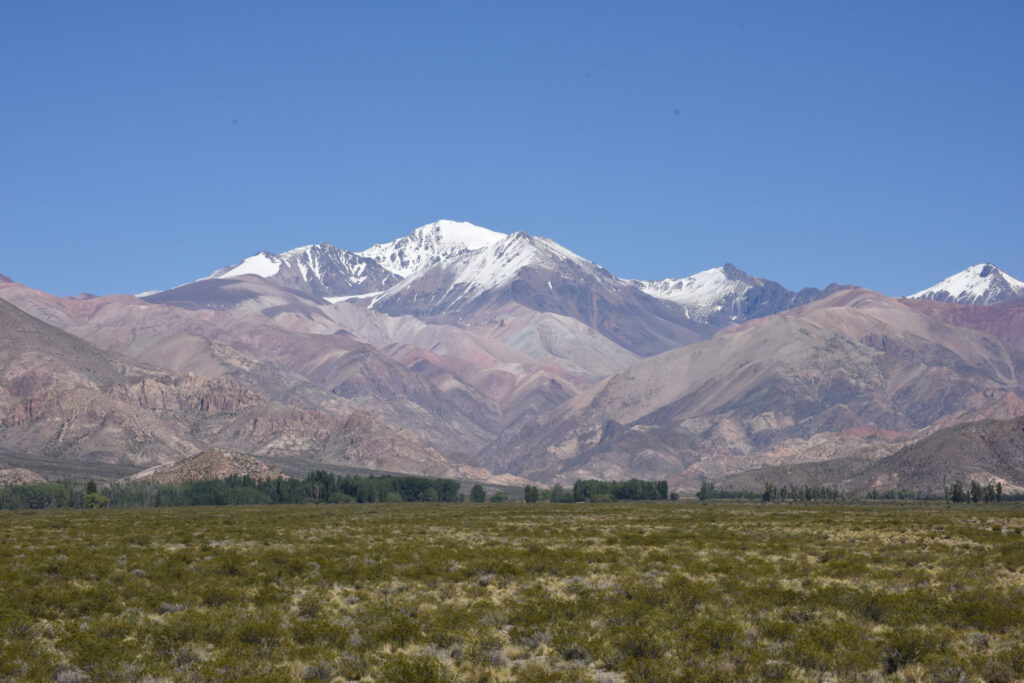
In arid zones, glaciers are natural water regulators, allowing for the existence of agricultural oases in the middle of the desert. These ice masses feed basins that support the production of walnut trees and grapevines, fundamental drivers of the local economy.
The Glacier Law, enacted in a context of social struggles, has become an exemplary piece of legislation internationally and a model of social action and participation. The Executive Branch's proposed amendment seeks, through various strategies, to weaken environmental regulations. This weakening does not imply a simple legislative reform, but rather an alteration of the rules that safeguard water, an essential resource for the sustenance and development of present and future generations.
The proposed amendment weakens the protection system established by the Glaciers Law, as it seeks, among other things, to allow local authorities to determine which glaciers or periglacial areas should be protected based on the criterion of hydrological relevance, disregarding other essential criteria such as water regulation, ecosystem functions, and scientific and social value (Art. 3). This decision also departs from the technical and scientific criteria established in the Glacier Inventory prepared by the competent federal technical agency, the Argentine Institute of Snow Science, Glaciology and Environmental Sciences (IANIGLA). In this way, the entire uniform environmental protection system established in Article 41 of our National Constitution is violated.
Meltwater rivers depend directly on the health of glaciers to maintain their flow during dry seasons. Without this constant supply of freshwater, the fruit-growing and wine-producing regional economies of western Argentina would collapse due to the lack of resources for human and industrial consumption.
Furthermore, as proposed in Article 4, the possibility is opened for provinces to make arbitrary decisions without technical or scientific basis, as they are permitted to deviate from the recommendations of IANIGLA (Argentine Institute of Glacial and Iberian Water Resources).
Moreover, proposed Article 5 modifies the absolute prohibition of activities that could alter the natural condition of these areas, their functions as strategic water resource reserves, their integrity, or their ecosystem function, including, among others: a) The release, dispersal, or disposal of polluting substances or elements, chemical products, or waste of any nature or volume; b) The construction of architectural or infrastructure works, with the exception of those necessary for scientific research and risk prevention; c) Mining and hydrocarbon exploration and exploitation; d) The installation of industries or the development of industrial works or activities. The application of this article is subject to the determination of the provinces, thus eliminating the general prohibition and clarifying the need to advance extractive projects in areas that are currently protected.
In arid zones, glaciers are natural water regulators, allowing for the existence of agricultural oases in the middle of the desert. These ice masses feed basins that support the production of walnut trees and grapevines, fundamental drivers of the local economy.
This modification is situated within the context of climate change, a framework in which glaciers play a fundamental role in water regulation, and any setbacks in the levels of protection achieved violate the international commitments made in this area.
The Andean provinces face profound and structural economic challenges. However, framing development solely in extractive terms obscures other sustainable productive alternatives that depend precisely on water preservation: regional economies, agriculture, tourism, local production, and activities that sustain entire communities. These are development alternatives that place social, economic, and environmental sustainability at their core.
En Naturaleza Argentina trabajamos en territorios amenazados por la megaminería: La Rioja, Catamarca, Mendoza, Salta, son algunos de los territorios que buscan superar la falsa dicotomía entre protección ambiental y desarrollo y que tienen infinitas posibilidades de desarrollo social, económico y ambiental sostenible. El cuidado del agua no es un obstáculo para el crecimiento: es su condición de posibilidad.
This legislative setback also represents a profound setback in collective agreements on water conservation and an attack on regional economies that depend heavily on water for their survival. Under these conditions, the proposed amendment to the Glaciers Law is unconstitutional and illegal, reduces current protections, and violates the minimum standards system.
It is illegitimate, as it lacks the necessary scientific and social consensus.
Above all, it poses several serious risks, not only to ensuring the current and future supply of water for human consumption, but also to the sustainability of regional economies. Glacier protection is not a sectoral debate; it is a decision about the development model and the present and future guarantees of the right to water.
María Laura Carrizo — Abogada ambientalista. Asesora legal y colaboradora de Naturaleza Argentina.