
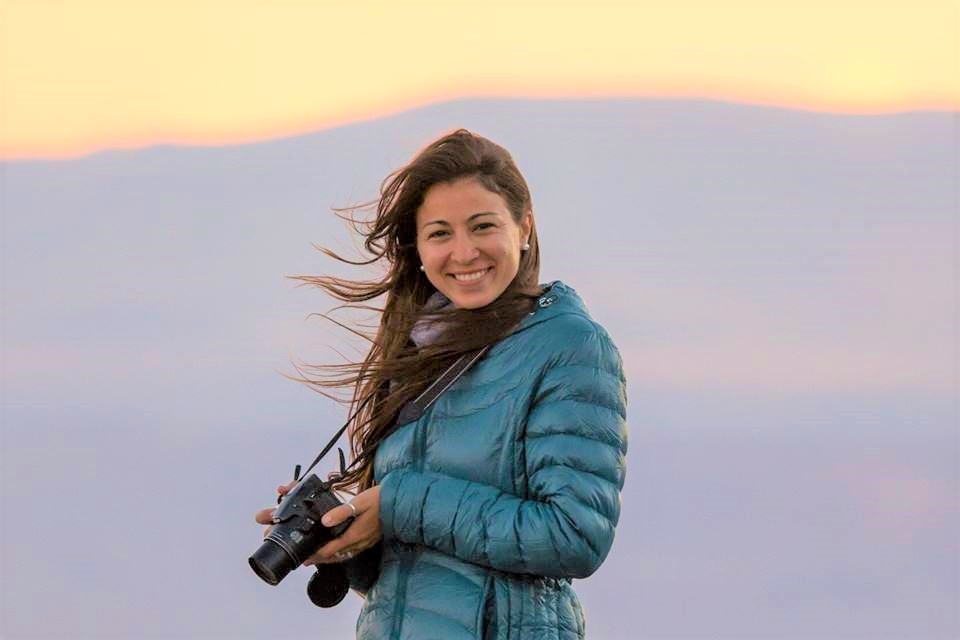
Desde su creación, Naturaleza Argentina ha trabajado en la protección de ecosistemas a través de áreas protegidas y el trabajo con comunidades locales. Su presidenta es bióloga, investigadora y líder en conservación, y ha dedicado su carrera a proteger la naturaleza desde el territorio. En esta entrevista, Lucila Castro repasa su recorrido, los desafíos de la conservación en el país y el rol clave de las comunidades locales en la protección del ambiente.
¿Cómo surgió la idea de fundar Naturaleza Argentina y cuáles fueron los primeros pasos para hacerlo realidad?
More than ten years ago, I was working for an NGO called the Pacific Biodiversity Institute, dedicated to conservation and research. Through this work, I met many people, both nationally and internationally, who were working in conservation. A group of friends and I decided to found an NGO dedicated to protecting our territory through a key tool: protected areas.
I assembled a team of professionals, initially focused on biology, and then we expanded to other areas, understanding the complexity of the conservation field. This is how we arrived at what we are today: a consolidated group of professionals from different disciplines, focused on science, conservation, finance, policy, and socio-environmental issues.
What do you think has been the organization's greatest achievement so far?
Podría mencionar dos logros. El primero tiene que ver con Naturaleza Argentina en sí: que exista en el centro del país, consolidada y en constante mejora, es un logro enorme. La fundación ha logrado abordar temas complejos de conservación con una mirada interdisciplinaria y un equipo altamente capacitado.
The second achievement is the creation of Ansenuza National Park. For me, being from Miramar, it meant a great responsibility to work on a project of this kind. I approached it from several angles: as a local, seeking what was best for that territory; as a professional, since I studied the flamingos of Mar Chiquita; and as a representative of one of the institutions that helped create the park. We still have the implementation phase to go, but knowing that, after more than seven years of work, the park is a reality is a source of pride.
Why do you choose to work with people who live in the territories?
Working with local communities is the foundation of everything that follows: conservation strategies, fundraising, team building. It wasn't a decision planned from the beginning; rather, we built it as we understood that all conservation decisions impact people's lives.
What began as a nascent idea is now an institutional policy: final decisions must come from those who live in these territories. Furthermore, significant changes in conservation must come from a mobilized society. We can propose ideas, but they must be developed in conjunction with the communities.
How did you train in the field of conservation?
I'm a biologist, a graduate of the National University of Córdoba. I'm proud to have studied at a public university that gave me so much and shaped my career. I was always looking for new experiences: at university, I got involved in every course where I could help, I collaborated with the museum in my hometown, and I began working in conservation from an academic perspective.
I had the opportunity to study abroad, doing internships at the University of Melbourne in Australia and at the National Autonomous University of Mexico, researching the jaguar. Then I worked at the International Society for the Study of Salt Lakes, which gave me a global perspective on conservation. All of this allowed me to understand the importance of combining science and management to implement conservation policies.
What was the selection process like for the international scholarships you won?
I applied and was selected for two international scholarships. The first was for training leaders in conservation worldwide, the Kinship Conservation Fellows program. Hundreds of people applied, and only 18 were selected from 13 countries. It was a month of intensive training, sharing with other young conservation leaders.
The second scholarship was the Boundless Fellowship, focused on conservation leaders in the Americas.
You were selected to be part of the World Land Trust board. What are your expectations regarding that position?
Yes, this year I was also selected to be part of the World Land Trust board, one of the most important NGOs worldwide. It's the first time that a young, female, and Latina woman has participated in the decision-making of this organization. I think I'll be able to learn a lot there and bring some of the change that the conservation world needs.
What is the most important lesson you could share with those who want to dedicate themselves to conservation?
After having traveled extensively and listened to professionals from all over the world, I think I can say that conservation must be done with and by local communities. They are the ones who live in the territories and will benefit from the protected areas. Our academic perspective is valuable, but it must be integrated with traditional knowledge to generate effective public policies.
Environmentalism can be a difficult field. How do we keep working and not let pessimism defeat us?
The world of conservation, the career we pursue, I don't know if it's pessimistic, but it's tough. Every day is a new battle. But I find solace in working with passionate professionals who challenge you to change your approach, to think differently. The environment I surround myself with keeps me inspired. And it also helps to celebrate small victories: from a successful workshop to spotting an animal on a camera trap, or something big like the creation of a national park. We need to keep building these support networks to address the most important issues together. These networks are what give you the will to keep going. Finally, when we see that something has worked, it's all worth it.
¿Qué puede aportar Naturaleza Argentina a la crisis ambiental del país?
For some years now, I've been constantly asking myself why we are where we are and where we are headed. Not just as a country, but as humanity. There's something I see: there's a complete disconnect between our daily lives, society, and nature. We fail to see ourselves as part of a whole, recognizing that we are who we are thanks to nature: the air we breathe, the water we drink, the food we eat. In our daily lives, we forget our connection to nature, we take it for granted, and this disconnection grows ever wider. Thus, we end up seeing environmentalists on one side and society on the other. I believe that until we heal this fundamental relationship with nature, we will not be able to achieve significant changes, not only in the environment but at all levels.
Protected areas, the tool we have chosen for conservation, seek precisely that: to unite conservation, dialogue within the territory, and sustainable production, and to remind us that we are part of a whole. But until we resolve this disconnection as humanity, we will not be able to go very far. At Naturaleza Argentina, we propose protected areas as a small step toward that goal. We still have a long way to go.
The creation of protected areas, for example, in one of the Foundation's projects in Catamarca, primarily helps us conserve the forests of those mountains, and with them, all the species they contain. We are now working on their implementation so that communities can make a living from these territories, not only because they breathe clean air and have clean water, but also because they can boost the sale of regional products and develop their activities. We see how they proudly show us everything they have, everything they can achieve through coordinated action.
It is essential to work together at the local, provincial, and national levels, viewing the country as a whole, but without forgetting the importance of decisions made locally, which directly impact people's lives.